MWR-103 - Roman Catholicism

- Description
- Curriculum
- Reviews
- Grade
MWR-103 — Roman Catholicism continues the Remnant Bible Academy’s Major World Religions courses with a thorough, Scripture-grounded examination of the largest branch of Christianity. The lesson opens with an initial snapshot of the Catholic Church — its various types and a survey of early Roman Catholic history — then works through its hierarchical leadership structure from the Pope down through cardinals, bishops, archbishops, priests, and deacons, and its geographical organization, including a detailed look at Vatican City and its famously secretive Apostolic Archives. A substantial section examines Roman Catholic beliefs, doctrines, and teachings point by point — the right and wrong of Catholic doctrine, its false teachings, the ordinances and the Mass, the crucifix, icons, the confessional, penance, the rosary, patron saints, priestly celibacy, ecumenism, and Catholic eschatology — along with a survey of the Church’s many religious orders. A lengthy history section then traces Roman Catholicism from its institutionalization as a state church through the great schisms of 1054, the Crusades, the Avignon Papacy, the Inquisition, the Reformation and Counter-Reformation, and up through Vatican II and the modern era, including the Church’s sex abuse scandals and current trends.
The lesson closes with a direct, Scripturally grounded assessment of where Roman Catholic doctrine departs from the Bible. Extensive photography and 277 cited sources support the material throughout. Required coursework for the Ministerial Ordination Program’s Major World Religions requirement, and valuable to any student who wants a thorough, honest survey of Roman Catholicism — its structure, its history, and where it diverges from the Scriptures it claims to uphold.
-
1
 Part 1 - Introduction
 -
2
Part 2 - Types of Catholic Churches
-
3
Part 3 - Early Roman Catholic History At A Glance
-
4
Part 4 - The Pope
-
5
Part 5 - Cardinals, Bishops and Archbishops, Priests, and Deacons
-
6
Part 6 - Roman Catholic Geographic Zones and Vatican City
-
7
Part 7 - The Right and the Wrong of Roman Catholicism
-
8
Part 8 - False Teachings of the Roman Catholic Church
-
9
Part 9 - Ordinances and the Mass in Roman Catholicism
-
10
Part 10 - The Crucifix, Icons, the Confessional Booth, Penance, the Rosary, the Hail Mary, and Novenas
-
11
Part 11 - The Crucifix, Icons, the Confessional Booth, Penance, the Rosary, the Hail Mary, and Novenas (Continued)
-
12
Part 12 - Patron Saints
-
13
Part 13 - The Celibacy of Priests
-
14
Part 14 - Roman Catholic Ecumenism and Interfaith Dialogue
-
15
Part 15 - Roman Catholic Eschatology
-
16
Part 16 - Roman Catholic Religious Orders
-
17
Part 17 - Institutionalization and the Rise of the State Church
-
18
Part 18 - The Chalcedonian Schism: A Church Split
-
19
Part 19 - Geopolitical Events That Propelled the Roman Catholic Church and the Pope to Greater Power
-
20
Part 20 - Pope Gregory I, Charlemagne, and the Byzantine Church
-
21
Part 21 - The East-West Schism of 1054
-
22
Part 22 - The Crusades, the Avignon Papacy, and the Inquisition
-
23
Part 23 - The Crusades, the Avignon Papacy, and the Inquisition (Continued)
-
24
Part 24 - Times of Change: Reformation, Counter-Reformation, and the Church of England
-
25
Part 25 - Roman Catholicism From the Later 1500s to the Present
-
26
Part 26 - Roman Catholicism From the Later 1500s to the Present (Continued)
-
27
Part 27 - Conclusion
-
28
Part 28 - References
-
29
 MWR-103 - Roman Catholicism
 -
30
 MWR-103 - Roman Catholicism Essay Question 1
 -
31
MWR-103 - Roman Catholicism Essay Question 2
-
32
MWR-103 - Roman Catholicism Essay Question 3
-
33
MWR-103 - Roman Catholicism Essay Question 4
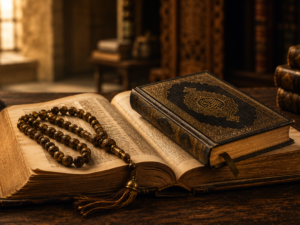
- Surveys the Catholic Church's origins, its hierarchical leadership from the Pope down to deacons, and its geographical and organizational structure, including Vatican City.
- Examines core Roman Catholic doctrines and practices in detail — the Mass, the sacraments, the confessional, the rosary, patron saints, priestly celibacy, and Catholic eschatology — evaluated against Scripture.
- Traces nearly two thousand years of Roman Catholic history, from its institutionalization as a state church through the great schisms, the Crusades, the Reformation, and into the modern era.
- Closes with a direct, Scripturally grounded assessment of where Roman Catholic doctrine and practice diverge from the Bible.
- A working familiarity with the New Testament narrative is helpful but not required; all historical and doctrinal background is explained as it's introduced.
- No prior study of Roman Catholic history, doctrine, or comparative religion is assumed.
- A Bible (any translation; Scripture quotations in this course use the NKJV) for personal reference alongside the lesson.
- Willingness to engage with detailed historical, doctrinal, and organizational material — this lesson is denser and more reference-heavy than a typical survey lesson.
- Students pursuing the Ministerial Ordination Program, for whom this course is a required part of the Major World Religions track.
- Christians who want a clear, well-documented understanding of Roman Catholic beliefs, structure, and history.
- Believers engaged in conversation or relationship with Catholic family, friends, or neighbors who want an accurate, Scripturally grounded understanding of what the Catholic Church actually teaches.
- Anyone examining or reconsidering their own Roman Catholic background in light of Scripture.
- Serious personal study or small-group use by students who want more depth than a typical introductory overview.